
Source: LAB501; author: matose; original publication: 24 November 2026
Background and positioning
When LAB501 tested the FSP Cannon PRO 2000W, it was the first 2 kW PSU on our bench. Today, we have reached 2500 W. What changed? Such a unit is difficult to justify in a gaming PC, but the arithmetic is straightforward for a workstation with three graphics cards drawing 600 W each: that is already 1800 W for the GPUs, before powering the processor and the rest of the system.
Growing interest in these systems prompted LAB501 to introduce its Pro & AI category. Cost is one reason to run AI models locally. If you use a service billed per token every day, the monthly bill makes that workload tangible. The more expensive the model and the heavier the usage, the more worthwhile it becomes to calculate the payback period for a workstation of your own, including electricity costs.
Our GIGABYTE AI TOP ATOM review already explored a compact system, using a local agent to install models and run benchmarks. When a model exceeds one GPU’s memory capacity, distributing it across multiple GPUs is one possible approach. A PSU for that system must provide enough continuous +12 V output and enough native connections to power the cards without adapters or improvised wiring.
This brings CPS PCCOOLER to the LAB501 bench for the first time. Behind the brand is Shenzhen Fluence Technology, founded in 2005 and previously known primarily for CPU coolers and fans. Its workstation portfolio also includes cooling for Threadripper and Xeon processors, alongside high-output PSUs such as this one.
The CPS PCCOOLER SU2500 ATX 3.1 is fully modular, uses a CE-LINK platform and includes four native 12V-2×6 cables. Its single +12 V rail is rated at 208.3 A, corresponding to approximately the full 2500 W rating. The author wanted to see how +12 V holds up near 208 A, and how efficiently the unit operates when a workstation is idle. LAB501 therefore added a 3% load point for PSUs above 2000 W: 75 W for this unit, much closer to idle demand than the roughly 250 W represented by the usual 10% point.
Exterior and cables
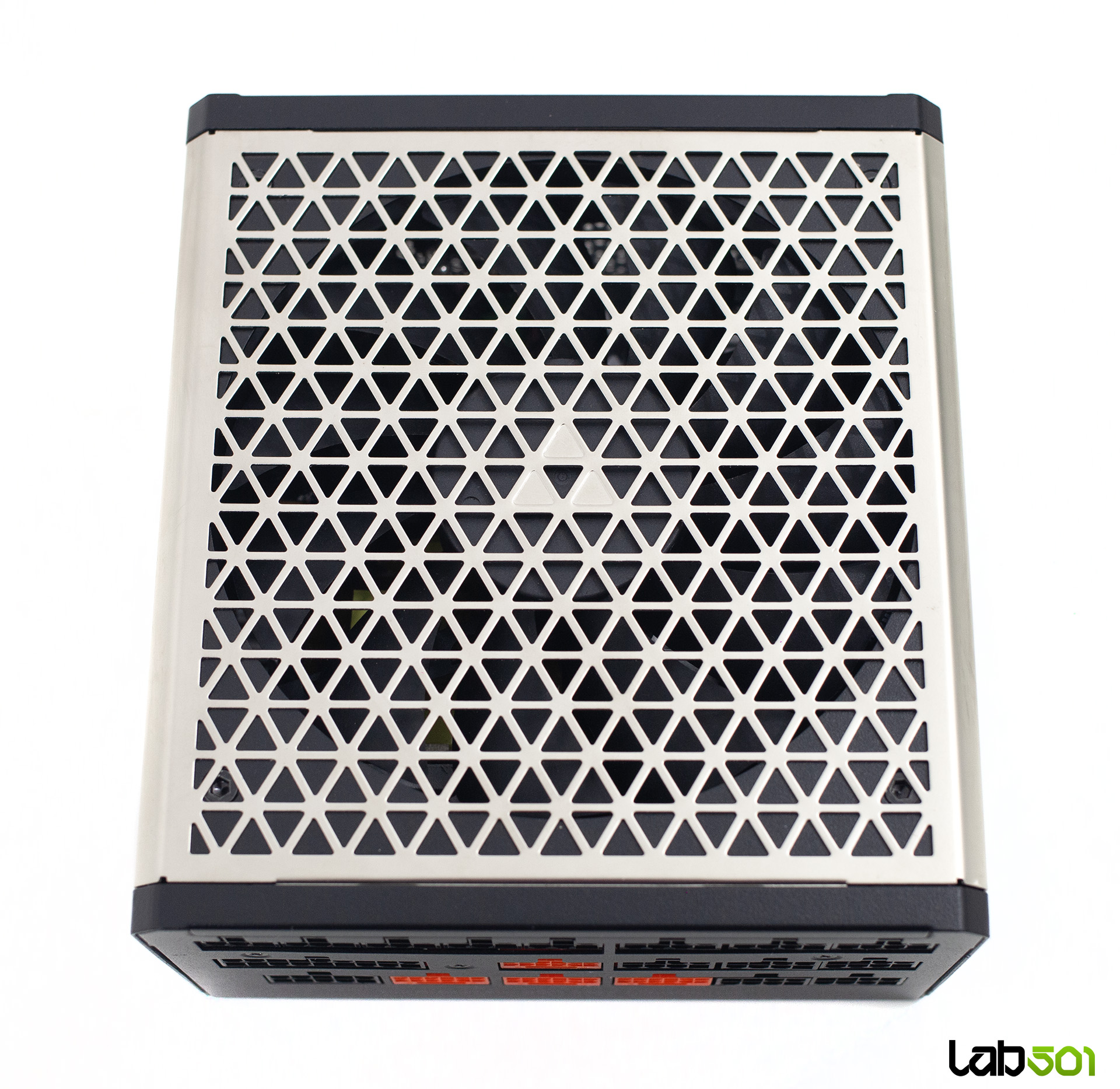
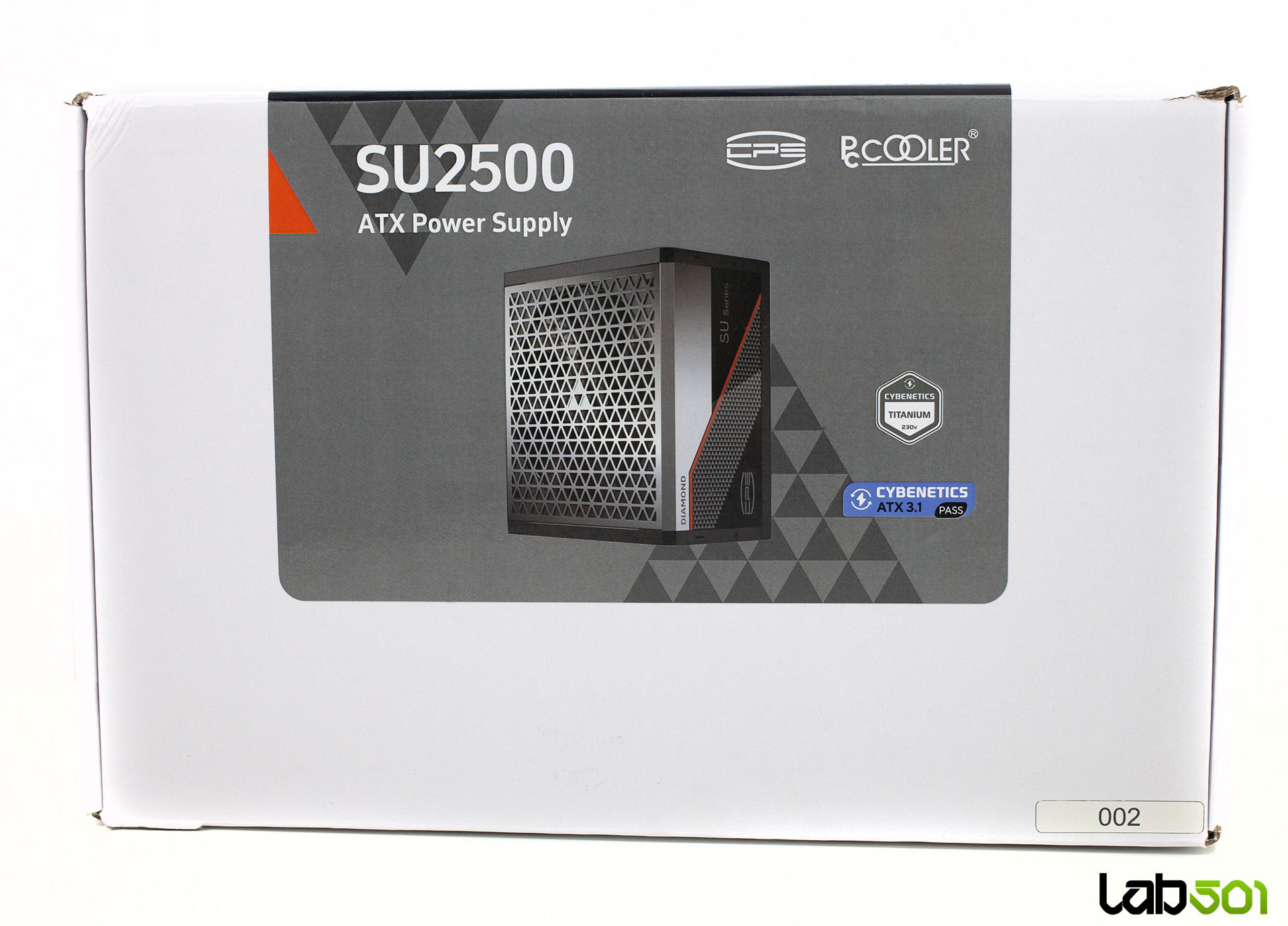
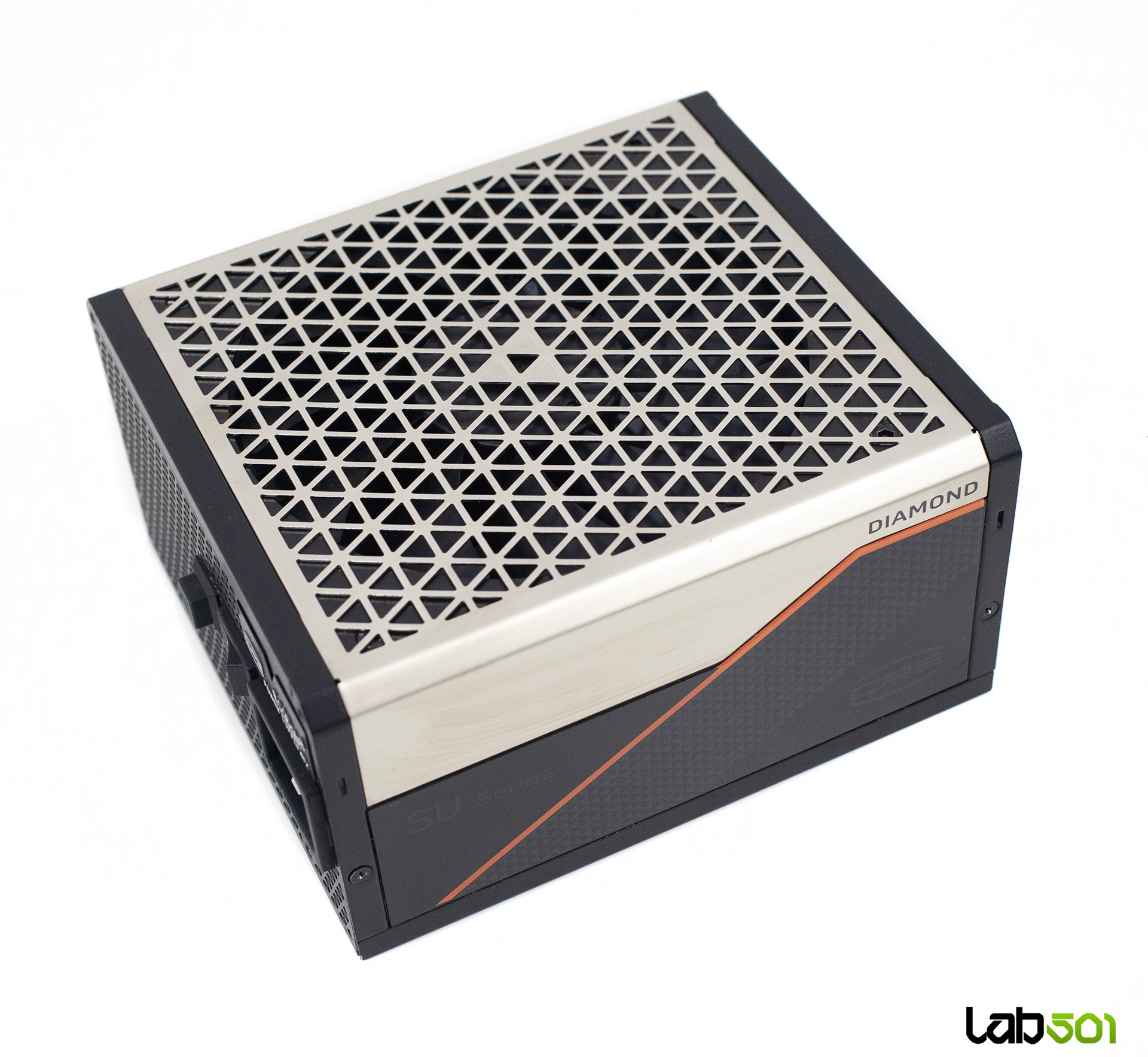
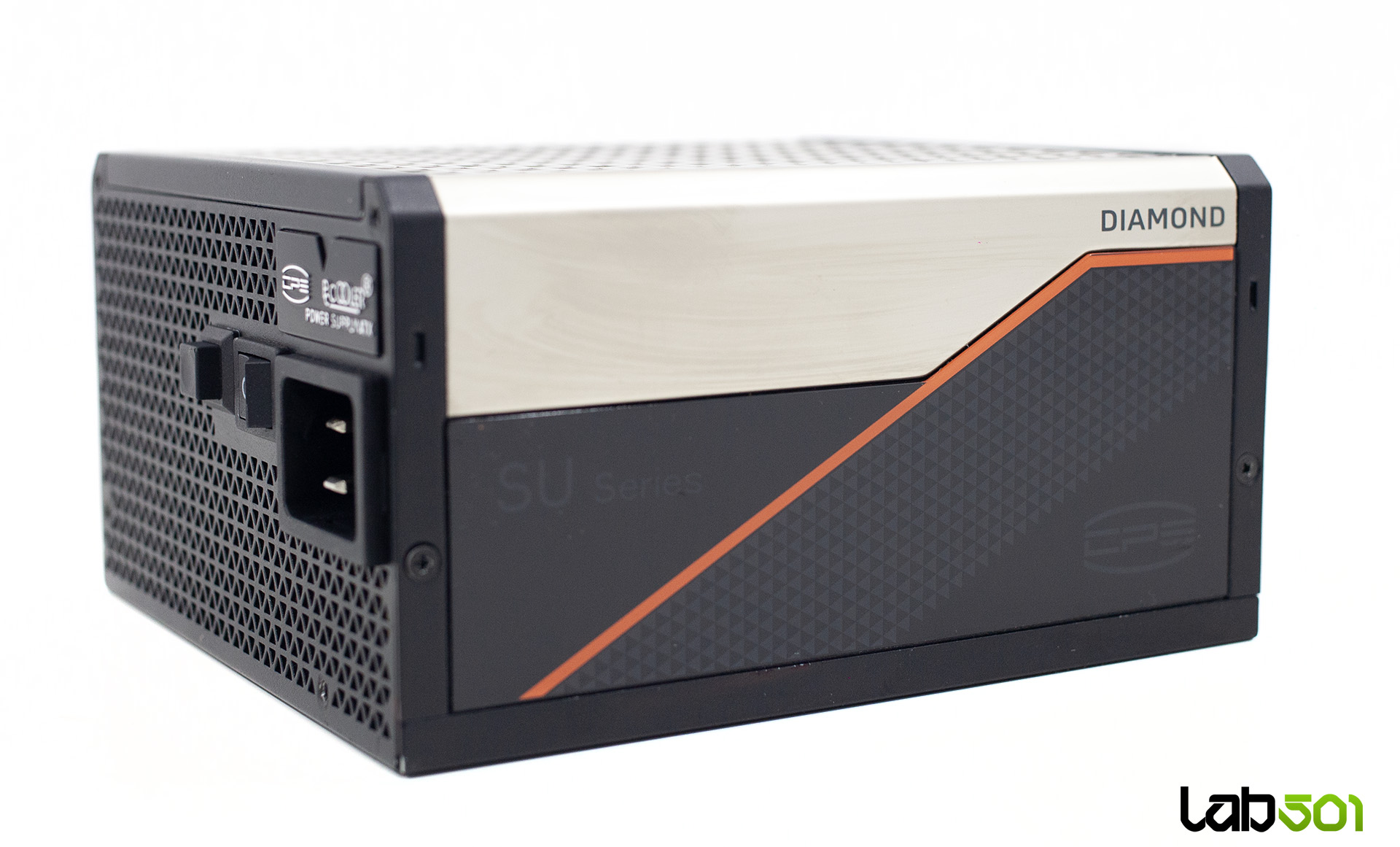
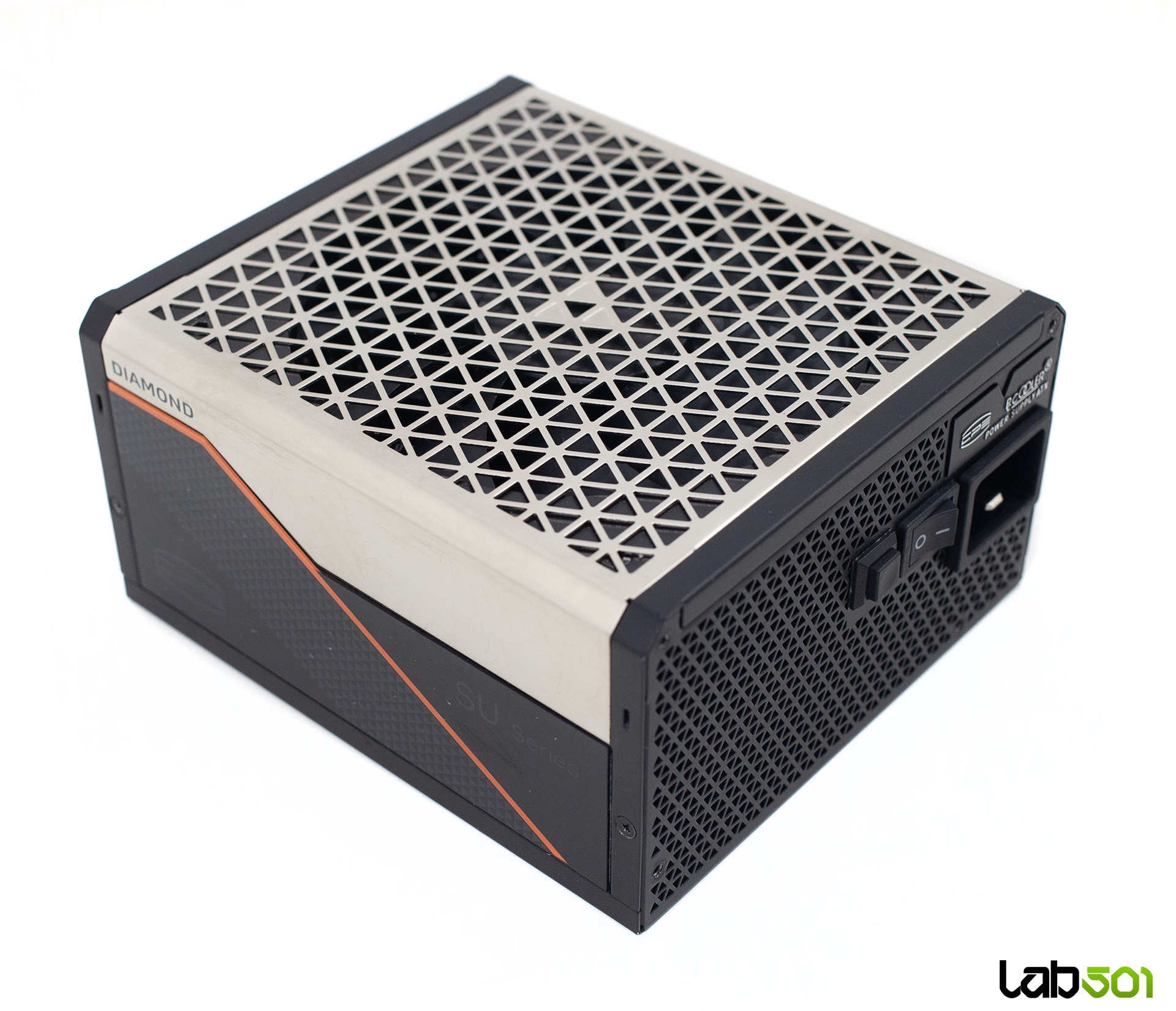
The SU2500 arrives in a white box with a product photograph on the front and specifications on the side. Its 165 mm housing depth is compact for a 2500 W PSU. A brushed silver cover contrasts with black side panels and an orange diagonal stripe. The 135 mm fan grille is cut directly into the cover, with three solid triangles forming the CPS emblem in its center.
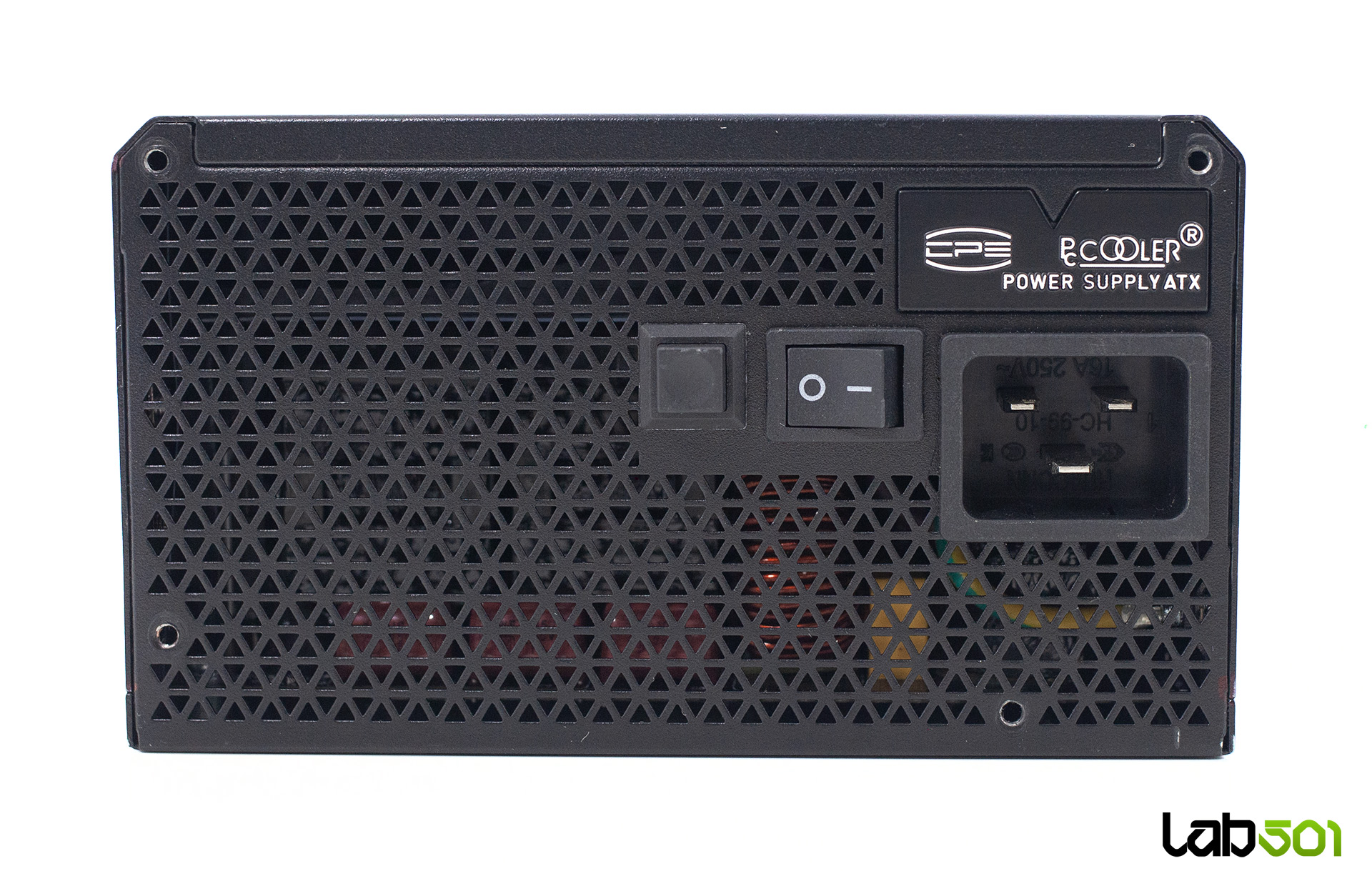
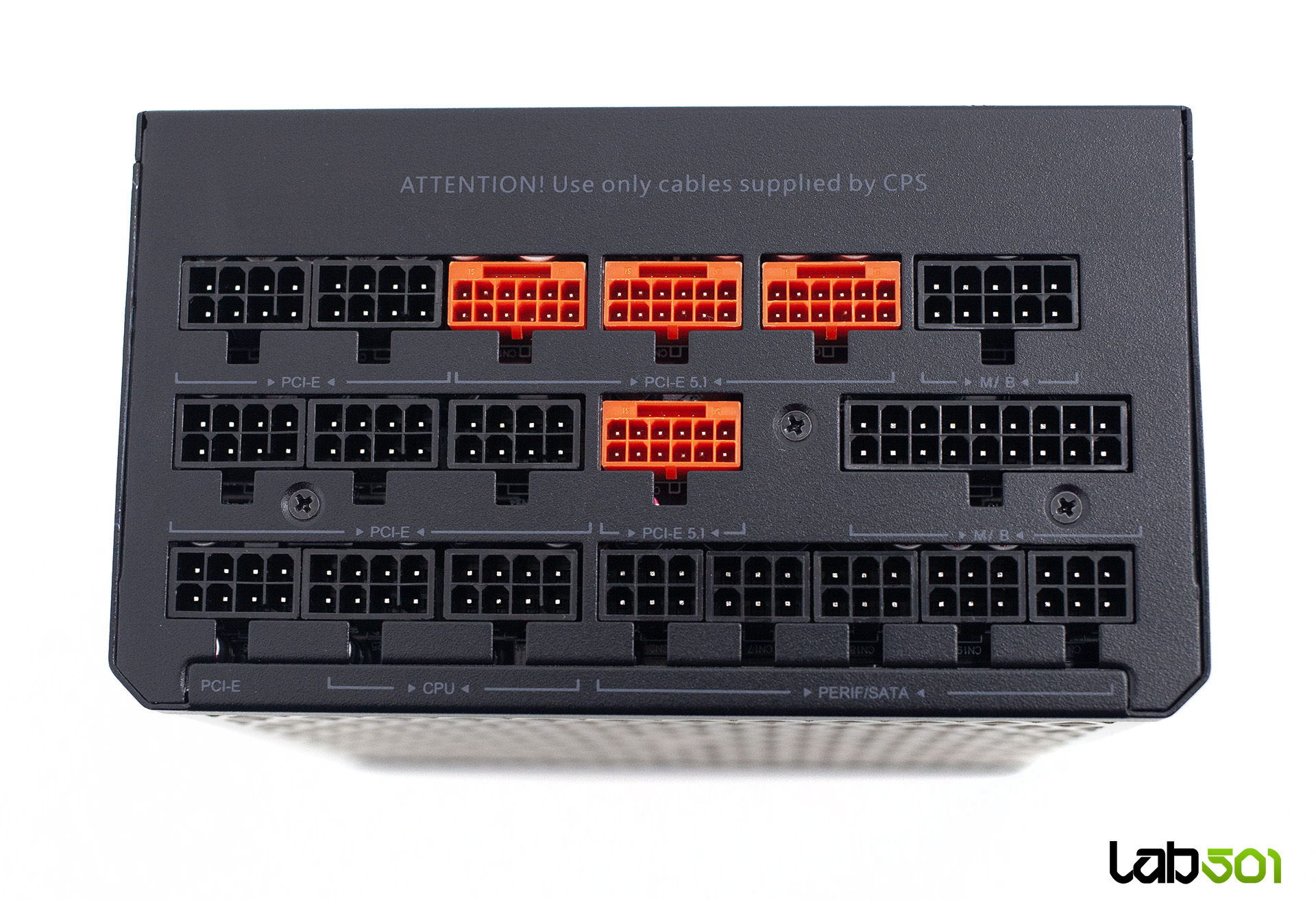
The rear black panel repeats the triangular ventilation pattern. The IEC C20 AC inlet, main switch and semi-passive mode button sit together on the right. At the other end, orange inserts identify the four 12V-2×6 modular sockets. The remaining sockets are black, with labels beneath each row.
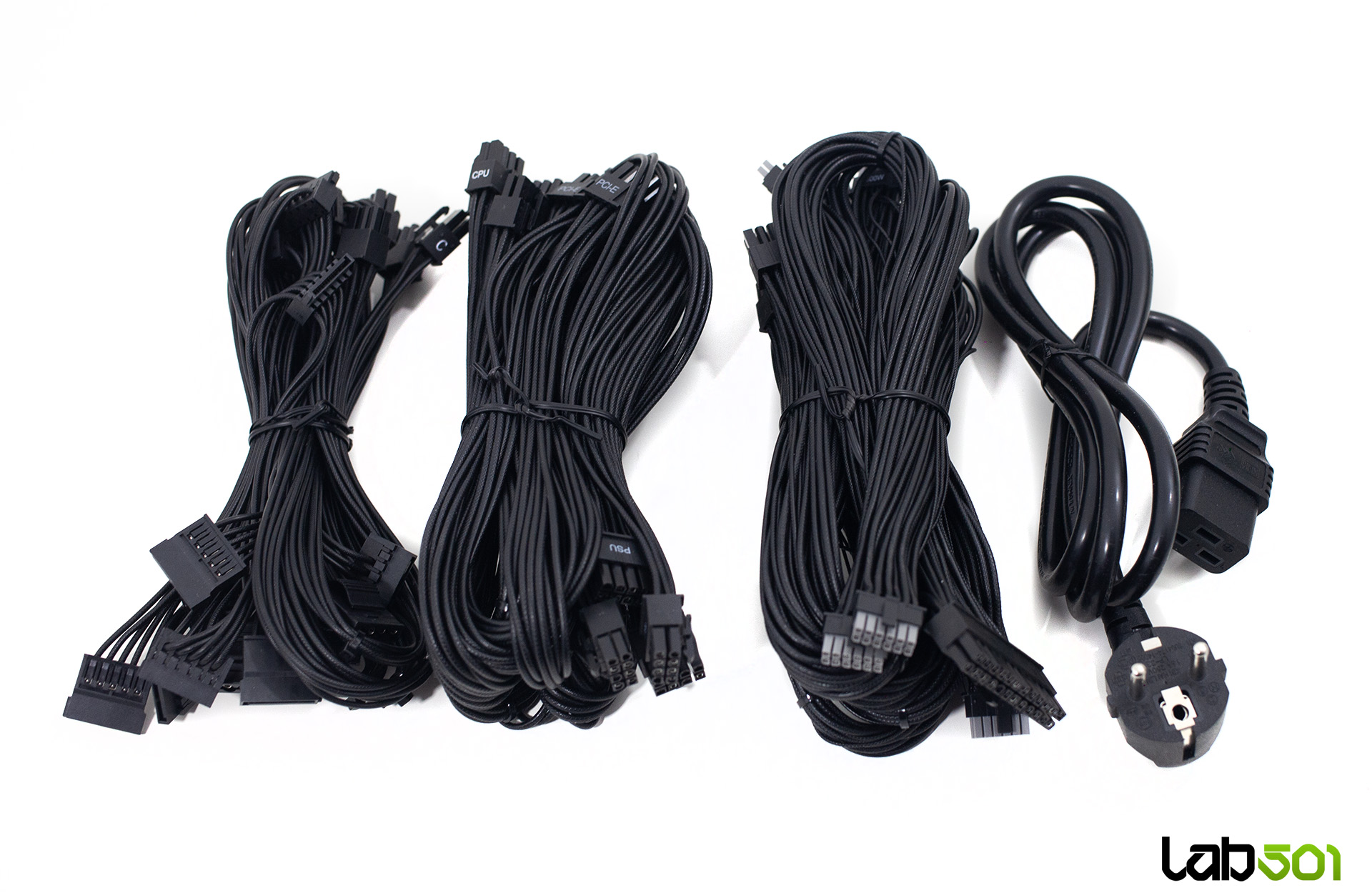
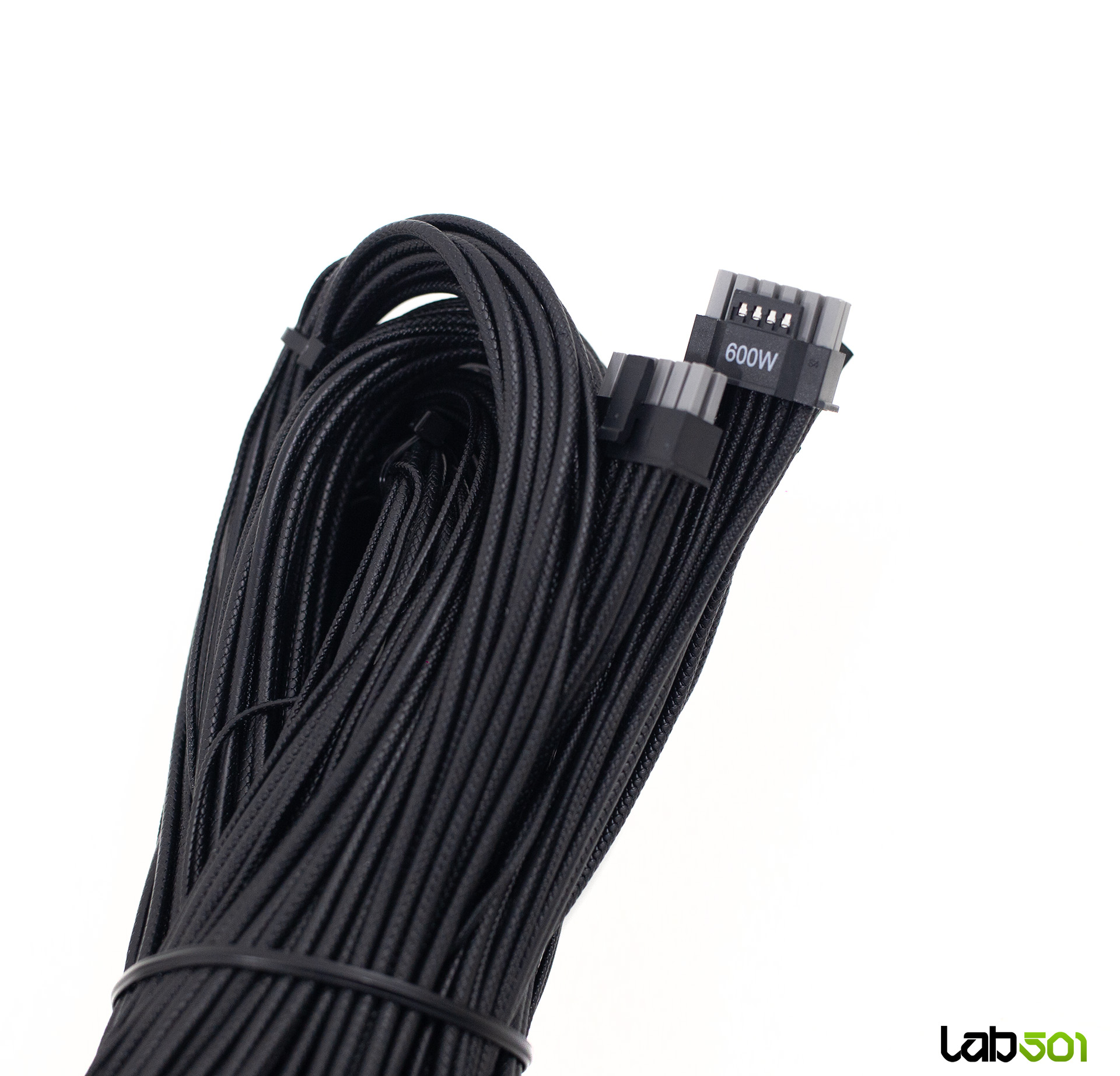
Cable quantities, connector counts and lengths are reproduced below. The original table calls the GPU cable “12VHPWR” and lists four connectors per cable, which is inconsistent with the description of four native 12V-2×6 cables. The original entries are retained for comparison; they must not be interpreted as permission to connect four high-power GPUs to one cable. Check the supplied cables and the official instructions for the particular product version.
| Cable type | Cable count | Connectors per cable (original table) | Length |
|---|---|---|---|
| ATX motherboard power | 1 | 1 | 600mm |
| EPS / ATX12V | 2 | 1 | 750mm |
| PCI-Express | 6 | 1 | 600mm |
| 12VHPWR | 4 | 4 | 600mm |
| SATA | 3 | 3 | 600mm + 150mm + 150mm |
| SATA + Molex | 2 | 2S + 1M | 600mm + 150mm + 150mm |
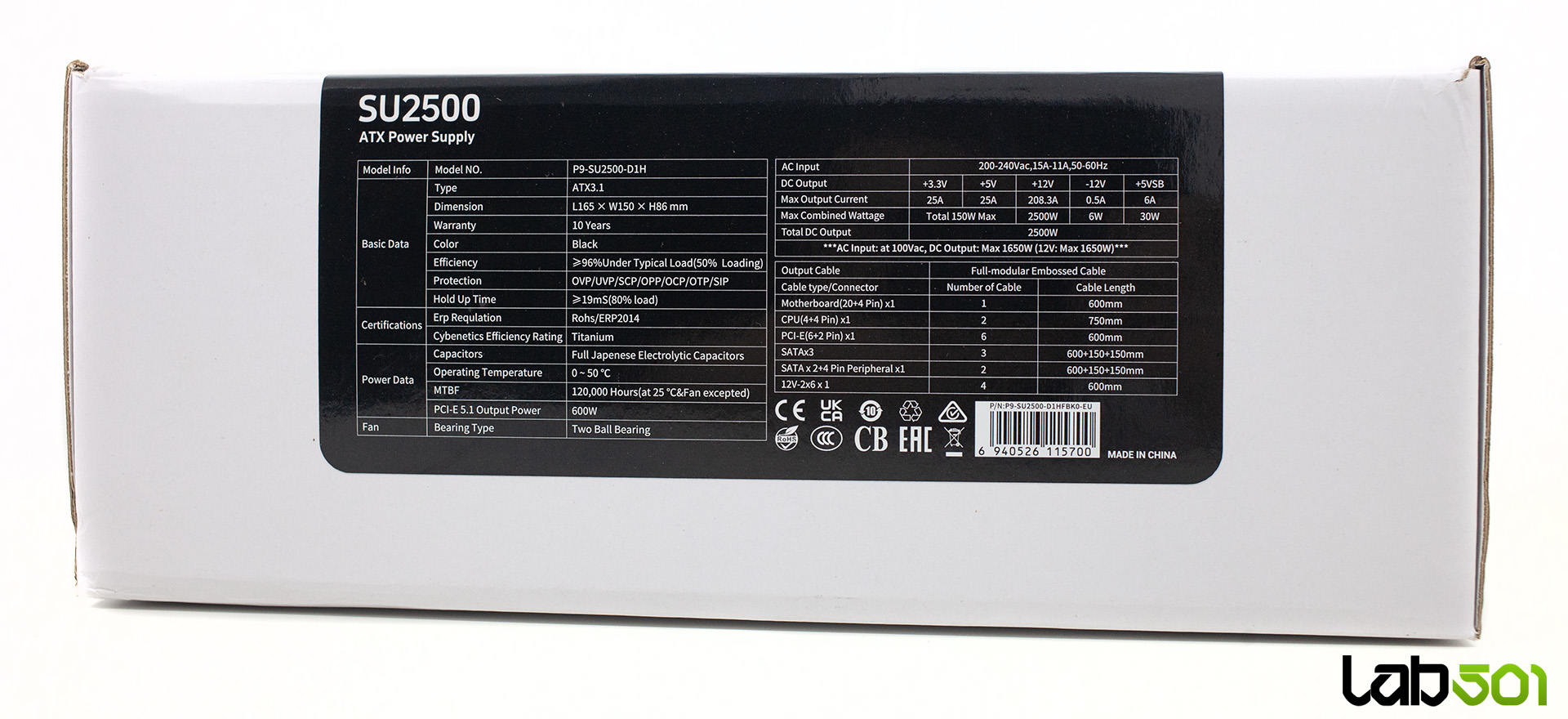
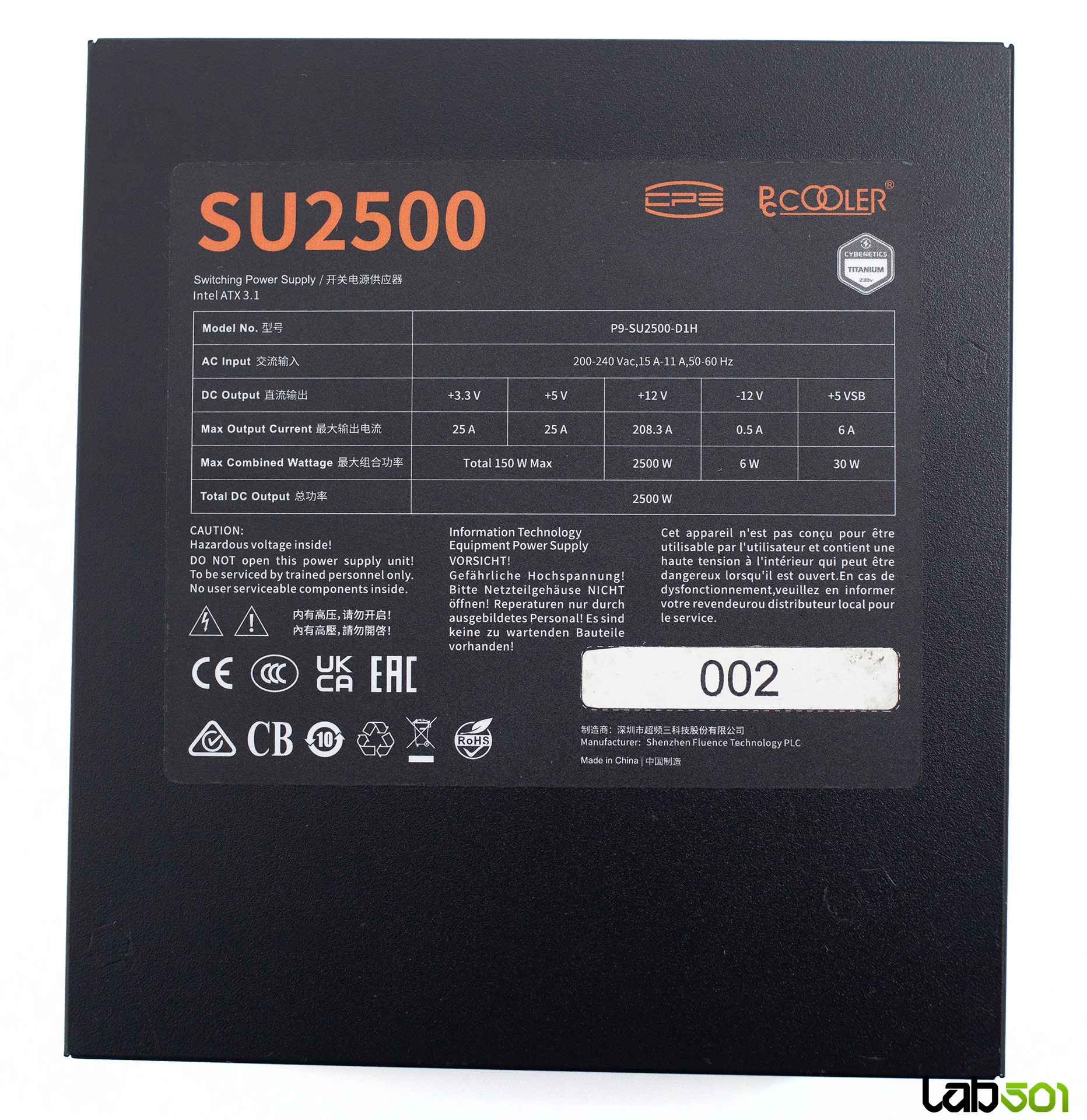
The electrical label is opposite the fan. The SU2500 is designed for 200–240 V AC, rather than universal 100–240 V input. The +12 V rail is rated at 208.3 A, or approximately 2500 W. The +3.3 V and +5 V rails are rated at 25 A each, with a combined 150 W limit; +5VSB is rated at 6 A. Individual rail capabilities must not simply be added together and treated as the total PSU rating.
Internal design
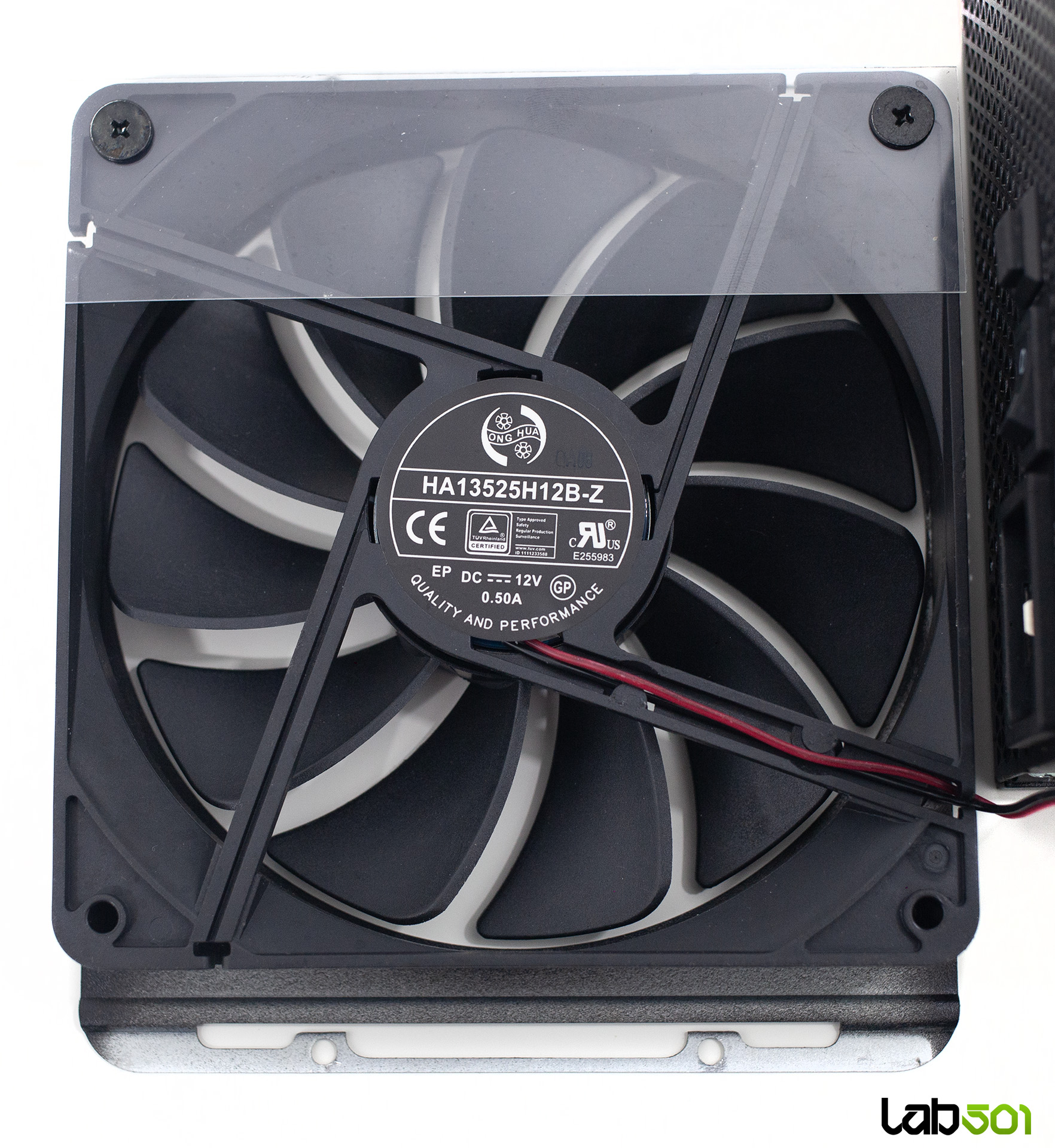
Cooling comes from a 135 mm Hong Hua HA13525H12B-Z fan with dual ball bearings. Semi-passive mode was enabled using the rear button. The fan started near 500 W, approximately 20% load, at a measured 236 RPM, rising to 2155 RPM at maximum load.
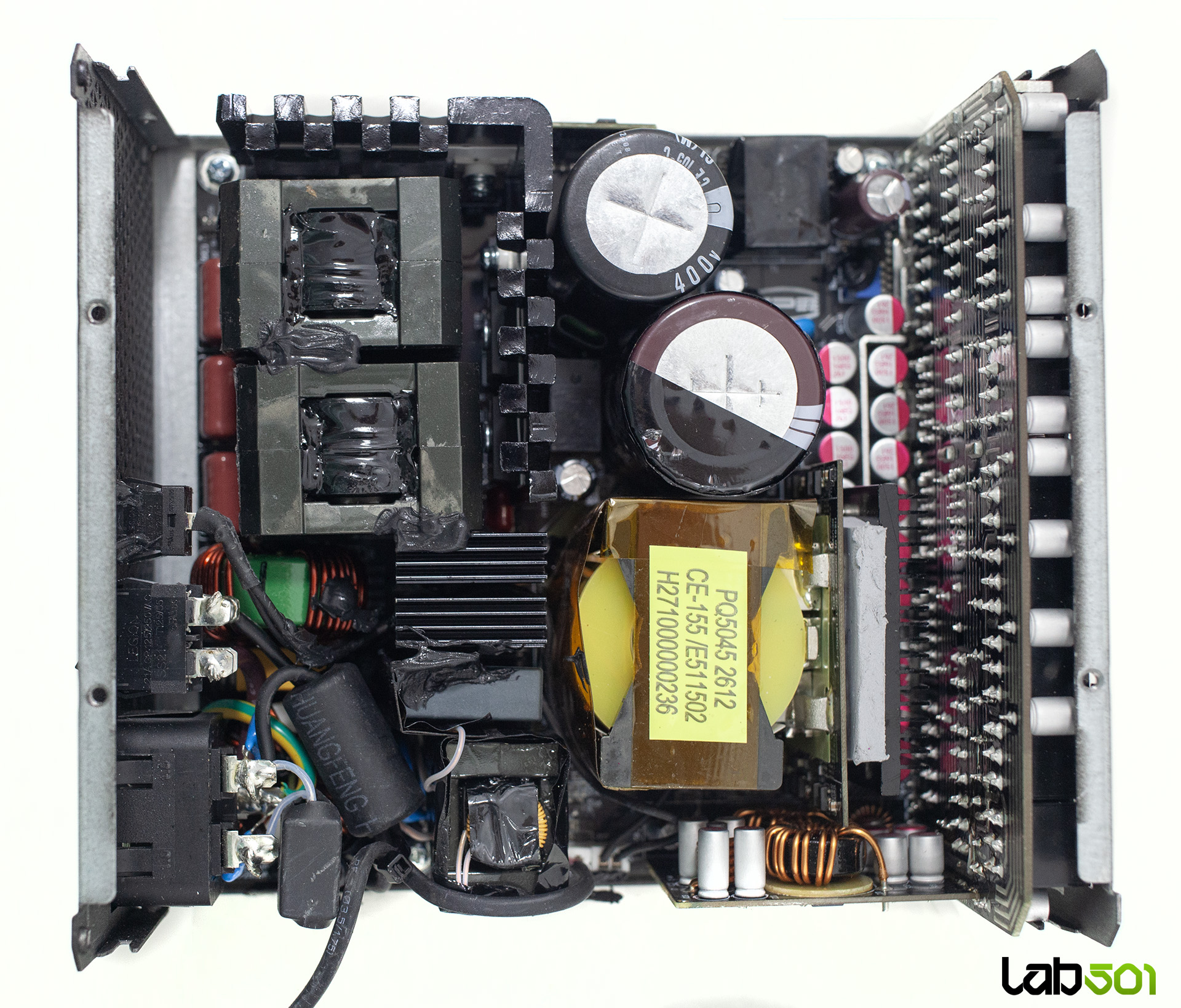
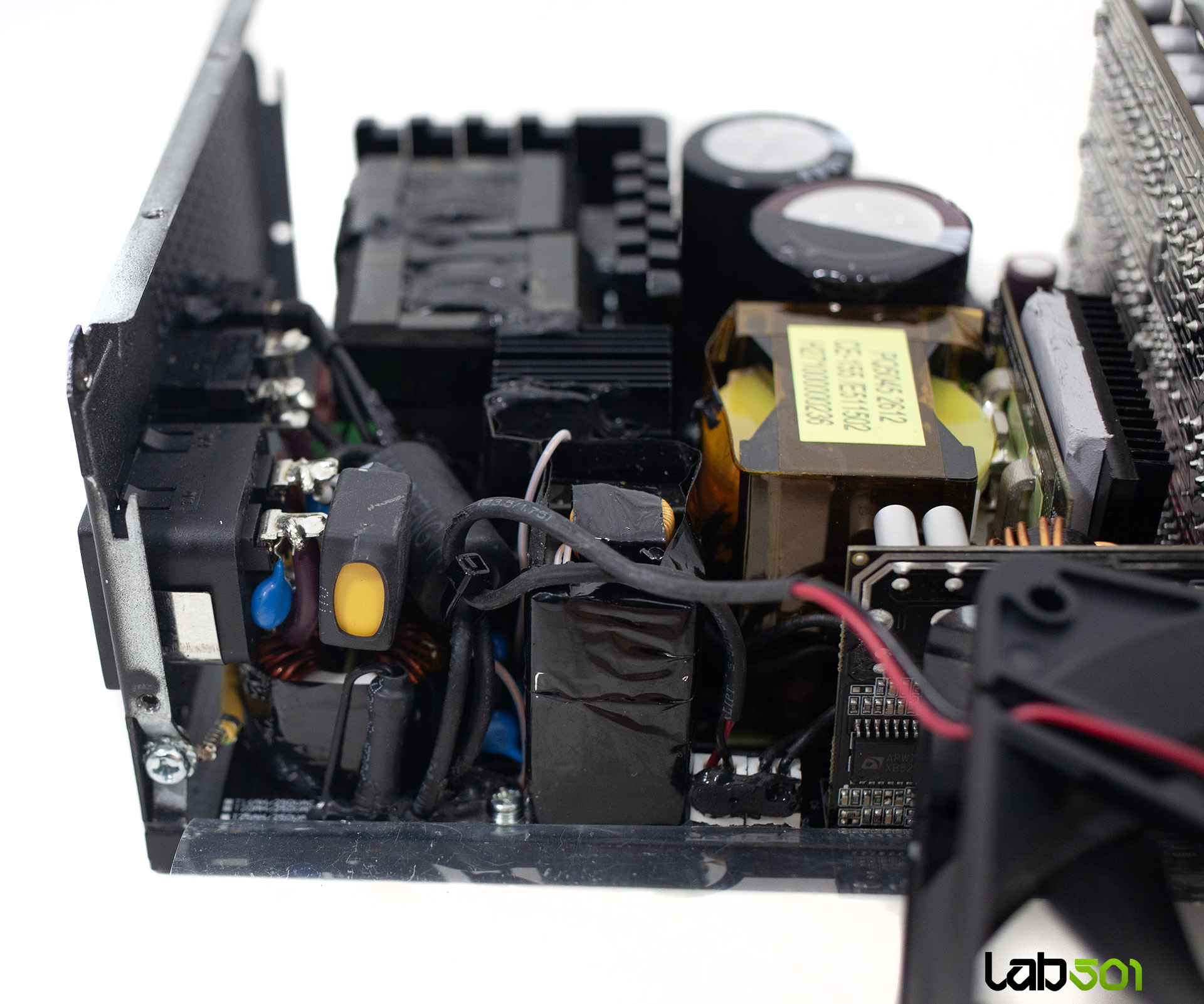
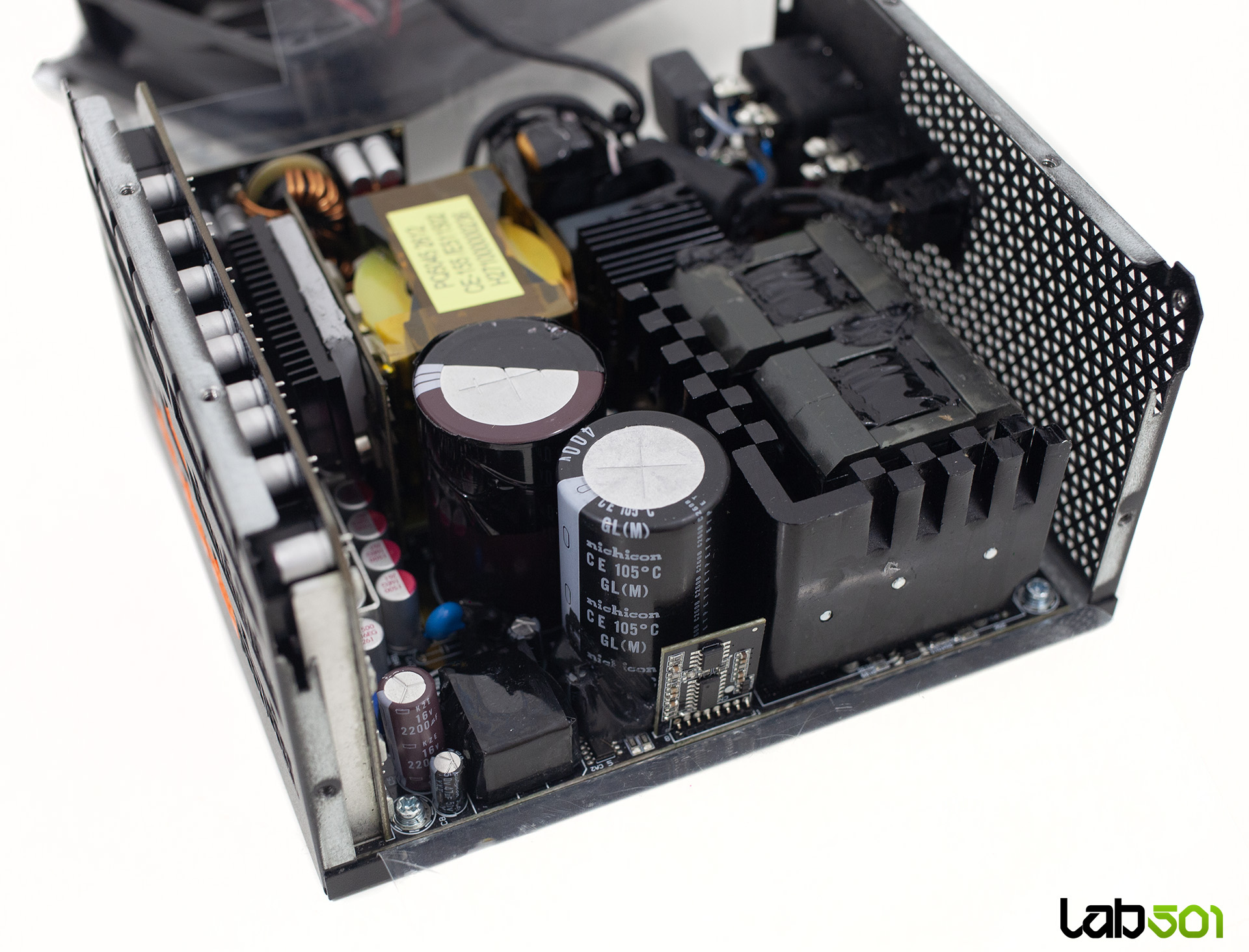
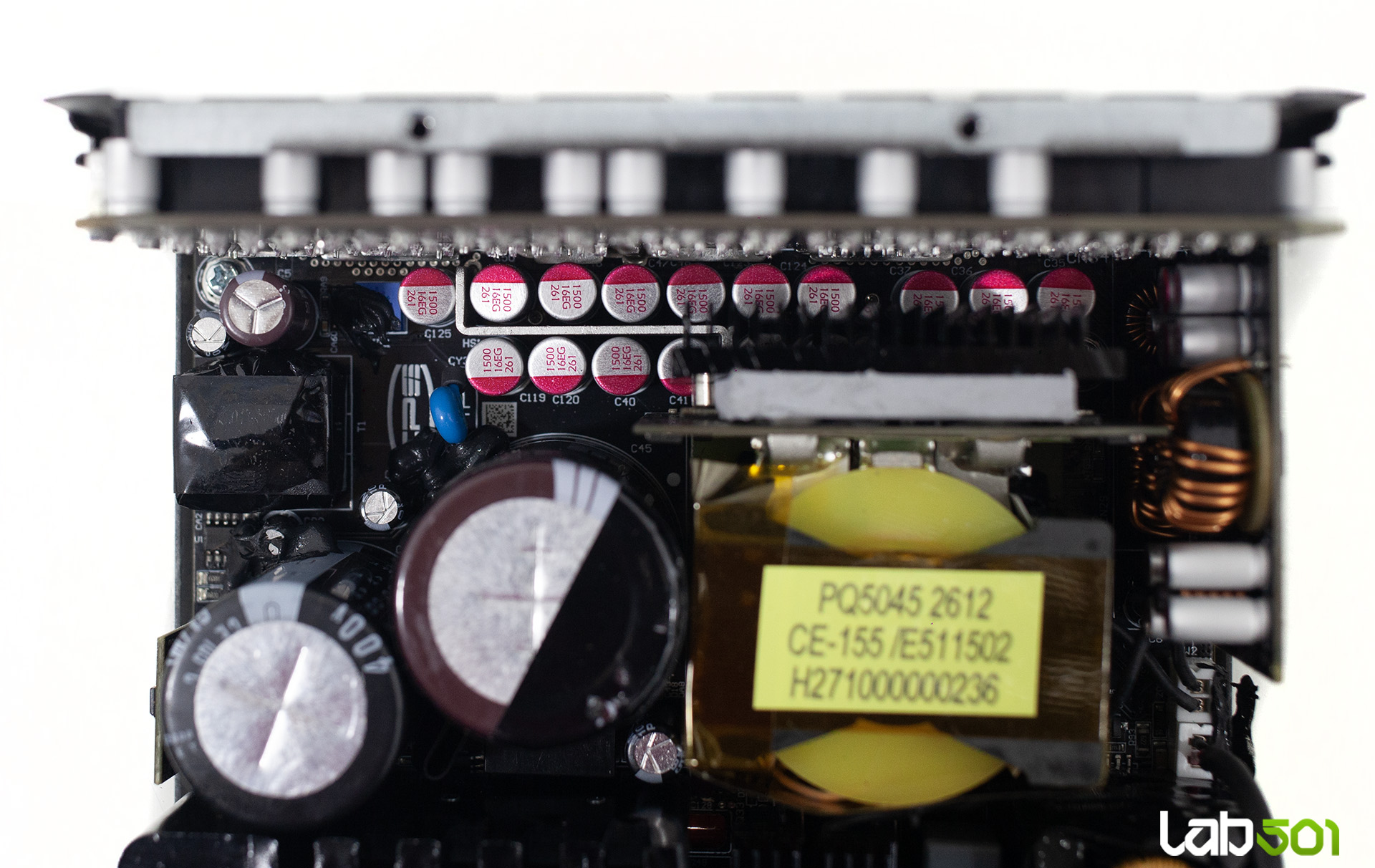
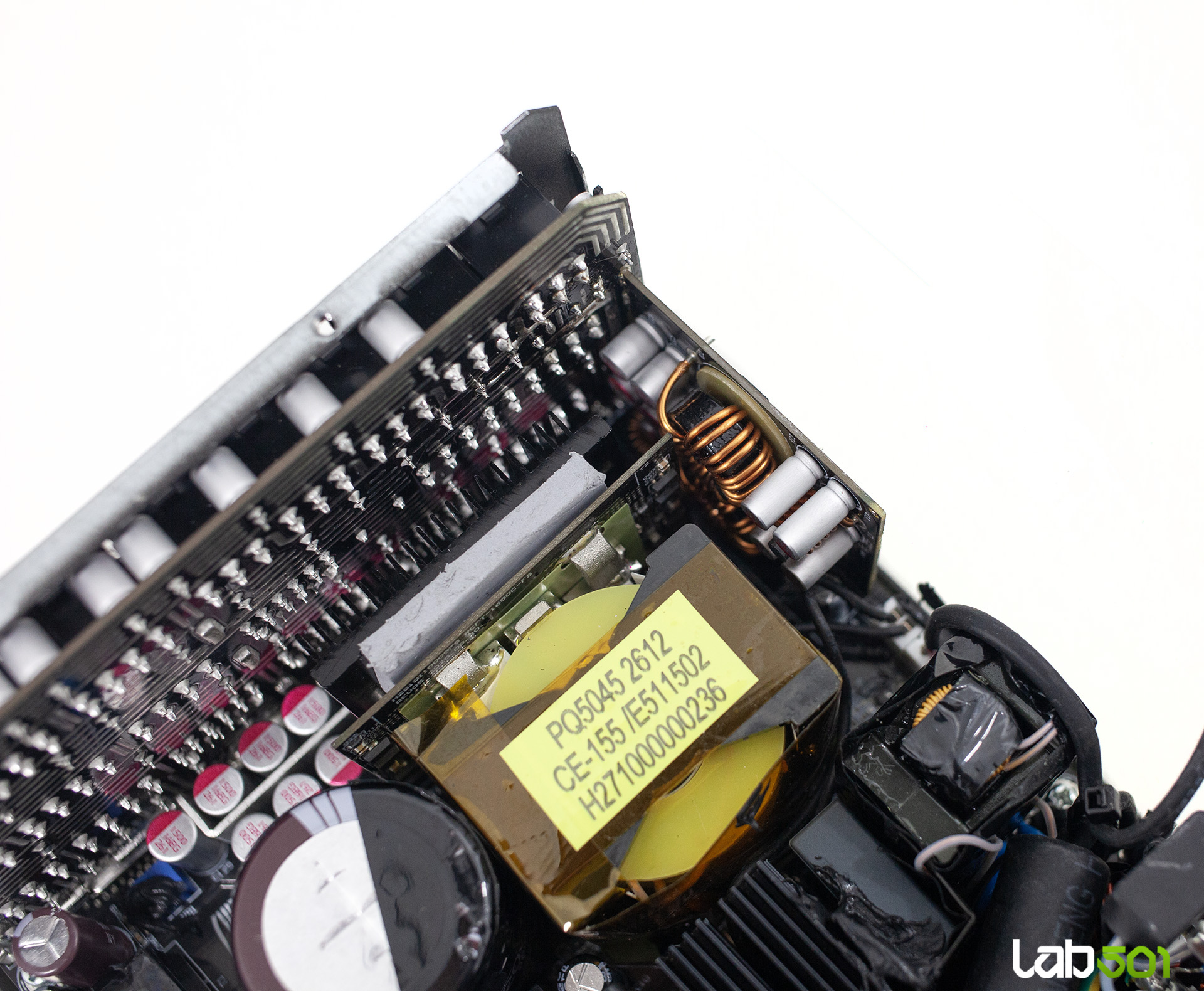
CE-LINK manufactures the platform. The primary side uses active PFC and a full-bridge LLC resonant converter. Synchronous rectification generates +12 V on the secondary side, while two DC-DC converters derive +3.3 V and +5 V. Crossload testing checks how these converters behave when the minor rails carry most of the load.
The EMI filter contains four Y capacitors, two X capacitors and two common-mode chokes. One X capacitor has an integrated discharge circuit. The input also includes a ferrite choke, fuse and surge-protection varistor. An NTC thermistor limits inrush current while the primary capacitors charge; a relay bypasses it after startup to reduce losses.
All electrolytic capacitors in the sample are Japanese-made, rated for 105°C. The primary uses an 820 µF/400 V Nichicon GL and an 1150 µF/420 V Nippon Chemi-Con KHE, totaling 1970 µF. Secondary filtering combines Nippon Chemi-Con KZE and Rubycon YXJ/ZLH electrolytics with Jamicon/Teapo EG polymer capacitors. “Japanese electrolytic capacitors” does not mean every capacitor technology in the unit comes from a Japanese manufacturer.
Load, efficiency and ripple testing
| Load | 5Vsb | 3.3V | 5V | 12V | AC input / DC output power | Power factor | Efficiency | Fan speed [RPM] | Temperature / difference (see text) |
|---|---|---|---|---|---|---|---|---|---|
| 3% | 0.5A | 1A | 1A | 5.3A | 89.8W | 0.798 | 83.55% | 0 | *25.7 °C |
| 5.03V | 3.31V | 5.04V | 12.11V | 75W | |||||
| 10% | 0.5A | 3A | 3A | 18.6A | 273.3W | 0.958 | 92.47% | 0 | *31.8 °C |
| 5.04V | 3.31V | 5.04V | 12.10V | 252.7W | |||||
| 20% | 0.5A | 7A | 7A | 36.6A | 534W | 0.981 | 94.31% | 236 | 9.4 °C |
| 5.06V | 3.3V | 5.03V | 12.10V | 503.6W | |||||
| 50% | 0.5A | 10A | 10A | 97A | 1331W | 0.991 | 94.43% | 784 | 13.1 °C |
| 5.05V | 3.27V | 5.01V | 12.08V | 1256.8W | |||||
| 100% | 0.5A | 15A | 15A | 197.8A | 2724W | 0.995 | 92% | 2155 | 10.5 °C |
| 5.04V | 3.24V | 4.97V | 12.03V | 2506W | |||||
| CL1 | 0A | 18A | 18A | 0A | 178.6W | 0.918 | 83.81% | 250 | 10.4 °C |
| 5.13V | 3.29V | 5.02V | 12.10V | 149.7W | |||||
| CL2 | 0A | 0A | 0A | 208.3A | 2716W | 0.995 | 92.34% | 2040 | 10.7 °C |
| 4.99V | 3.26V | 4.99V | 12.04V | 2508W |
LAB501 added the 3% point because 10% of a PSU above 2000 W is already a substantial load. On the SU2500, 75 W is more representative of a modern idle system than approximately 250 W. Efficiency is 83.55% and power factor 0.798 at 3%; at 10%, they rise to 92.47% and 0.958. Efficiency reaches 94.31% at 20%, peaks among the measured points at 94.43% at 50%, and is 92% at full load.
Across 3–100% load, +12 V falls from 12.11 V to 12.03 V. The 0.08 V change is approximately 0.67% of nominal voltage. The +5 V and +3.3 V variations are 1.40% and 2.12%, respectively. Voltage also remains stable in both crossload scenarios, as the author expected from DC-DC regulation. These percentages describe variation between load points, rather than the deviation of one reading from its nominal voltage.
In CL1, +3.3 V and +5 V each carry 18 A and measure 3.29 V and 5.02 V. The unloaded +12 V rail remains at 12.10 V. The minor rails deliver 149.7 W against their combined 150 W rating, at 83.81% efficiency. CL2 concentrates the load on +12 V: at 208.3 A it measures 12.04 V, while +3.3 V and +5 V remain at 3.26 V and 4.99 V. Output reaches 2508 W at 92.34% efficiency.
The fan stays off at 3% and 10%. At 20%, it runs at just 236 RPM, with a 9.4°C exhaust-to-intake temperature difference. At half load, conversion losses reach 74.2 W, fan speed rises to 784 RPM and the difference reaches 13.1°C. Full-load losses are 218 W, but the fan accelerates to 2155 RPM, reducing that difference to 10.5°C. The table marks the fan-off temperature entries with an asterisk; these should not be treated as directly equivalent to temperature differences measured with airflow.
Testing stops near rated output; sustained overload testing was not performed. The author considers 2500 W sufficient to assess the intended operating range. Exceeding it continuously would require equipment that distributes the load more evenly across a larger number of 12V-2×6 connectors. LAB501 says its new PSU test equipment had been under installation and configuration for over nine months, with commissioning planned for Q1 2027. That was a plan at publication, not evidence that the SU2500 passed an overload test.
Ripple measurements cover the three main DC outputs. At full load, +12 V measures 14.8 mV, approximately one eighth of the 120 mV ATX limit cited by the source. It remains at 14.4 mV in the +12 V-only CL2 scenario. The minor rails reach their maxima in CL1: 22.8 mV on +3.3 V and 18 mV on +5 V, both below half the cited 50 mV limit. All readings appear below.
| Load | 3.3V | 5V | 12V |
|---|---|---|---|
| 3% | 14.4 mV | 8.8 mV | 5.6 mV |
| 10% | 14.8 mV | 10.4 mV | 6.4 mV |
| 20% | 16 mV | 13.2 mV | 9.6 mV |
| 50% | 18 mV | 14.4 mV | 12 mV |
| 100% | 22.4 mV | 16.8 mV | 14.8 mV |
| CL1 | 22.8 mV | 18 mV | 6 mV |
| CL2 | 14.8 mV | 6 mV | 14.4 mV |
Conclusion
When LAB501 first tested a 2 kW PSU years ago, the key question was whether it could deliver its label rating. Today, local AI workstations offer a practical reason to want 2500 W. The author appreciates that the SU2500 concentrates this output on +12 V inside a housing just 165 mm deep. Measuring 12.04 V while drawing more than 200 A demonstrates the sample platform’s regulation capability.
The author would still like tighter minor-rail regulation. Variations of 1.40% on +5 V and 2.12% on +3.3 V remain within specification, but a PSU intended to power costly professional equipment ideally would keep both below 1%. Ripple suppression, however, earns praise: even near the minor rails’ combined output limit, both remain below half the cited ripple limit.
The SU2500 becomes clearly audible above roughly 70–80% of rated power. The author sees this as an understandable tradeoff for a compact unit dissipating more than 200 W of conversion losses at full load. Its fan is obvious on the open bench, although he expects GPU and case cooling to be louder in a workstation drawing over 1750 W. A room supporting sustained operation at that level also needs cooling, bringing its own noise. This is his assessment of likely use conditions, not a measured whole-system acoustic ranking.
At original publication, neither price nor launch date was available, so value judgments were deferred until retail availability. The author welcomes another option in an ultra-high-output segment long associated with a small group of suppliers. CPS PCCOOLER chose an ambitious model for its LAB501 debut, and the measured results support its capabilities within the tested conditions.
Original review (five pages) — Images and original measurements: the original author and LAB501.


